WASP 2040 Reviews: See Why 0 Shoppers Rated It 0 Stars!
With a 0/5 from 0 reviews, the WASP 2040 3d printer gets a lot of love (and side-eye). We looked into both sides.
 Supermod
 Moderator
 Recaptor
WASP 2040: A Professional FDM 3D Printer Built for Precision and Educational Use
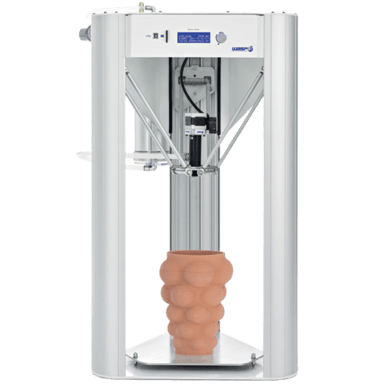
When exploring professional-grade 3D printers designed for prototyping and engineering, the WASP 2040 stands out as a compelling option. Released in 2017, this delta-style FDM printer aims to deliver precision and reliability tailored for professionals and educational institutions alike. On paper, its specifications suggest a robust build volume, respectable print speeds, and a level of user customization that can meet demanding prototyping workflows. But does it really live up to its numbers for professional users? Let's dive deeper into the engineering details and features that define this Italian-made machine.
Detailed Specs & Features
The WASP 2040 is engineered with a build volume of around 7.9 x 7.9 x 15.75 inches, which translates to approximately 4888 cubic inches. This generous vertical capacity is perfect for taller prints, a characteristic strength of its delta frame design, known for speed and smooth circular motions. The layer resolution maintains a consistent 500 microns, suggesting it's optimized more for rapid prototyping than ultra-fine detailed finishes.
Power-wise, the printer supports dual-voltage inputs (110-220 volts), making it versatile for global environments, and it consumes 180 watts at peak operation. Its external power supply, along with a modest operating temperature range of 59-86°F, makes it suitable for typical office or lab conditions without complex climate controls. The machine is designed without an energy-saving mode, a small note for those seeking eco-conscious devices. On the hardware front, the open enclosure model with an all-glass build plate offers easy access and visibility into the printing process.
Users can expect smooth surfaces on their parts thanks to the smooth glass plate, which is also removable for straightforward print removal. The device uses a single extruder with a standard 1 mm nozzle diameter. It supports quick-swap nozzles, which is a convenient feature to help professionals adapt to different printing needs efficiently. In terms of software, the WASP 2040 relies on proprietary software and is compatible with widely used slicers such as Cura, Slic3r, Simplify3D, and Repetier-Host.
Connectivity includes USB and SD card support, though remote monitoring or cloud-based controls are absent, reflecting a more traditional operation style. The device complies with CE safety standards and incorporates essential safeguards such as an emergency stop button and overheat protection, emphasizing user safety during extended printing sessions.
User Experience & Performance (Based on Specs)
Design & Build
The WASP 2040's delta frame stands about 34 inches high and weighs approximately 88 pounds, making it a prominent but manageable desktop presence. Its manual bed leveling approach prioritizes precision over automation, implying that users with technical experience will appreciate the control it affords over first-layer calibration, which is further supported by built-in calibration features.
However, this might represent a steeper learning curve for beginners or those accustomed to auto-leveling systems. The open frame design improves accessibility and airflow but also means less protection from ambient temperature fluctuations and particulate matter. The absence of an enclosure lock highlights that safety must be ensured by the operator in active environments; something to consider, particularly in educational or workshop settings.
Performance
Official specs put the maximum print speed at 150 mm/s, though a more realistic effective speed of 80 mm/s is reported when balancing accuracy and detail. This speed notably allows complex prototypes to complete relatively quickly; for instance, the iconic Benchy test model takes about 180 minutes to print, aligning with industry averages for professional-grade FDM machines. Print accuracy is rated at 100 microns, a respectable figure for functional prototypes and mechanical parts. However, the lack of multi-material printing and the absence of advanced fault detection, like print recovery or spaghetti detection, indicate that the WASP 2040 is optimized for straightforward printing jobs without the need for constant monitoring or intervention.
Camera / Display / Audio Quality
The compact 2.4-inch monochrome display with a resolution of 128x64 pixels provides basic but effective navigation cues. On the audio front, the printer operates at 55 dB during printing, which is a notable noise level in quieter environments but fairly standard among delta machines of this vintage.
Extra Features
The printer lacks many modern extras like built-in cameras, filament runout sensors, and power-loss recovery, which are becoming common in newer models. However, it does support tool-free nozzle replacement and compatibility with third-party filaments, including biocompatible materials. This last aspect could be crucial for educational institutions focusing on medical or dental prototyping.
Pros & Cons
Pros
- Large vertical build volume offering taller print capability
- Quick-swap nozzle system to adapt to various job needs
- CE safety certification with emergency stop and overheat protection
- Supports third-party and biocompatible filaments for specialized applications
Cons
- No automatic bed leveling, increasing setup complexity for new users
- Absence of filament runout detection and power-loss recovery features
- No energy-saving mode, making continuous operation less eco-friendly
- Limited connectivity options without remote monitoring or cloud integration
Price & Value for Money
Priced at $5750 at MatterHackers, the WASP 2040 sits in the higher midrange for professional FDM printers. Given its 1-year warranty and the dual-voltage capability that permits use worldwide, this investment makes sense for users who need a reliable, high-build delta printer with safety certifications. However, buyers seeking the latest automation features or integrated monitoring may find models with similar build volumes but added smart functions better suited for their workflows.
Quick Take
In short, the WASP 2040 delivers a solid, mechanically sound printing experience with a large build area and safety-conscious design. If we look at the numbers alone, it excels for controlled, professional environments but may lag for users wanting convenience features and smart controls.
Closing Recommendation
The WASP 2040 may be ideal for professional users or educational settings where print accuracy, volume, and safety weigh heavily on selection criteria. It appears to perform best when operated by technically proficient users who value reliability over automated assistance. While it helps users achieve efficient prototyping tasks, those unfamiliar with manual setup might encounter a learning curve.
Verdict
Rating: Based on the specifications and overall feature set, we believe WASP 2040 deserves 4.1 out of 5.
- Winner Feature => Robust build volume combined with safety certifications ensures professional-grade results.
- Needs Improvement => Lack of automation and smart connectivity limits usability for beginners and remote workflows.
Reviews 0
The good, the bad, and the brutally honest.Average Rating


More 3D Printers 453
Unlock more awesome finds.